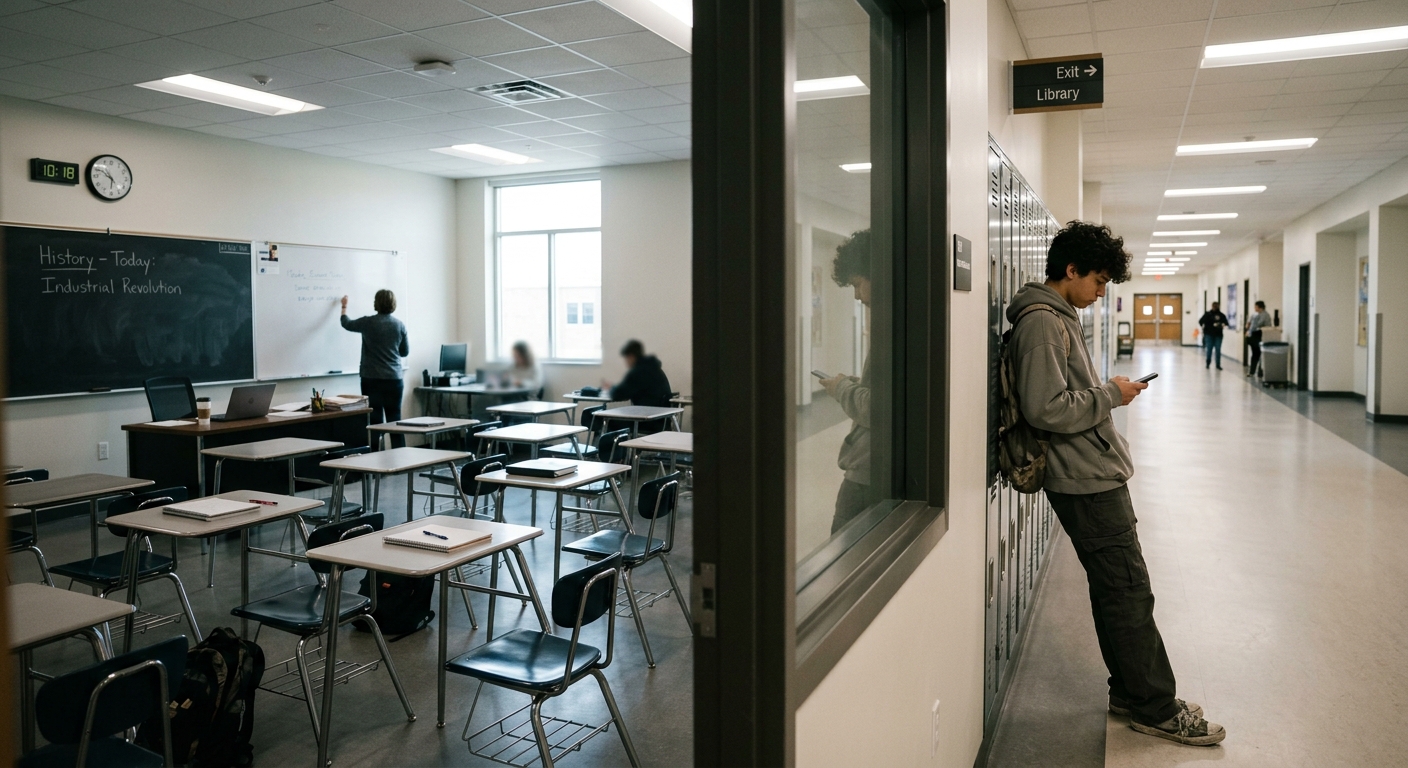
How does absenteeism affect your grades and your ability to study?
Being absent from school directly lowers your grades and exam results. Studies show that every single day of school missed directly affects your changes of doing well in your GCSEs. Trying to catch up on missed work makes it even harder due to now having to put in double the amount of work for present and past assignments. Studies also show that about 84% of secondary school pupils who rarely miss school pass their English and Maths GCSEs. However, for students who are absent for only 10% or more on average only 36% pass their exams.
How does absence affect your grades?
Every single day you miss school your changes of success in your grades drops significantly.
- Missing 10 Days (95% Attendance): In Year 11 halves your chances of getting a Grade 5 in English and Maths compared to students who are in school every day.
- Missing between 5% and 10% of the school year is enough to drop you by one full grade across every single GCSE subject you take. Absence of 50% or more: The pass rate for English and Maths GCSEs is to just 11%.
- The National Pupil Database shows that lost learning affects your grades exactly the same way, irrelevant of the reason. School attendance is regarded as a key driver of children’s academic success.
How absence affects your ability to study
Missing school doesn’t just affect exam day, it changes how your brain handles the stress of studying.
- School subjects are taught like building blocks. Each lesson builds on the last one. If you miss a step you will find the next one very confusing. You are already falling more behind due to not focusing on the lesson at hand and trying to make sense on the part you missed.
- Breaking Your Routine: Learning is a habit. When you are absent you break your daily routine. This makes it much harder to concentrate and focus when you return to the classroom.
- Catch-Up Stress: When you return to school you have to do two things at once, learn the new work and catch up the work you missed. This workload makes you feel overwhelmed and less confident.
- Losing Social Ties: Missing class means you miss out on group discussions with your class mates. Studies show that students who miss a lot of school feel less connected to their class mates that intern lowers your motivation to study.
When Does Absence Affect You Most?
A UK study found that missing school can affect results, particularly in Years 10 and 11 before GCSEs. But missing lessons in Year 7 can also make it harder to adjust to secondary school and keep up with new subjects.
If you fall behind, create a realistic catch-up timetable. Work through missed tasks bit by bit while keeping up with current lessons. Stay focused and follow your plan until you are back on track.