What does it take to be a pilot in the UK
Becoming a commercial pilot is a career that combines technology, responsibility, travel and teamwork. Whether you dream of flying passengers around the world or working in another part of the aviation industry, becoming a pilot requires commitment, training and a strong sense of responsibility.
How do you become a commercial pilot?
Your journey starts at school. GCSEs are important, particularly Maths, English and Science. A-levels or equivalent qualifications can also be useful, with subjects such as Maths and Physics providing a good foundation. Before beginning professional flight training, you will need to pass a UK CAA Class 1 medical assessment. You then choose a suitable flight- training route, such as an integrated programme or modular training. Your training includes flying lessons, aviation theory and practical examinations. To progress towards an airline career, you will work towards qualifications including a Commercial Pilot Licence (CPL) and the necessary instrument and multi-engine training, as well as completing airline- focused training.
What type for person makes good pilot?
You don’t have to fit a particular personality type to become a pilot. However, certain qualities are extremely valuable: Calm: You need to think clearly and make sensible decisions under pressure. Responsible: Safety is always the priority. Focused: Pilots must pay close attention to procedures, information and their surroundings. A good communicator: Pilots communicate constantly with other crew members and air traffic control. A team player: Flying an airliner is a team effort. Disciplined: Training requires dedication, preparation and continuous learning. Confident but sensible: Good pilots have confidence in their abilities while recognising when they need advice or assistance. Adaptable: Weather, schedules and circumstances can change, so pilots need to respond professionally.
Where could this career take you?
Commercial pilots can work for airlines, charter operators and other aviation organisations. With experience, a First Officer can progress towards becoming a Captain. Aviation can also open doors to other careers, including flight instruction, aviation management and specialist flying roles.
Advice for students
If becoming a pilot interests you, start researching the career early. Find out about the qualifications and medical requirements, speak to people working in aviation and investigate different flight-training routes before making any major decisions.
You don’t need to know exactly where your career will take you while you’re still at school. Start by building strong academic skills, developing your confidence and communication abilities, and exploring the world of aviation.
Could you see yourself in the cockpit?
If you enjoy technology, travel, problem-solving and working as part of a team, commercial aviation could be a career worth exploring.
What do pilots actually do
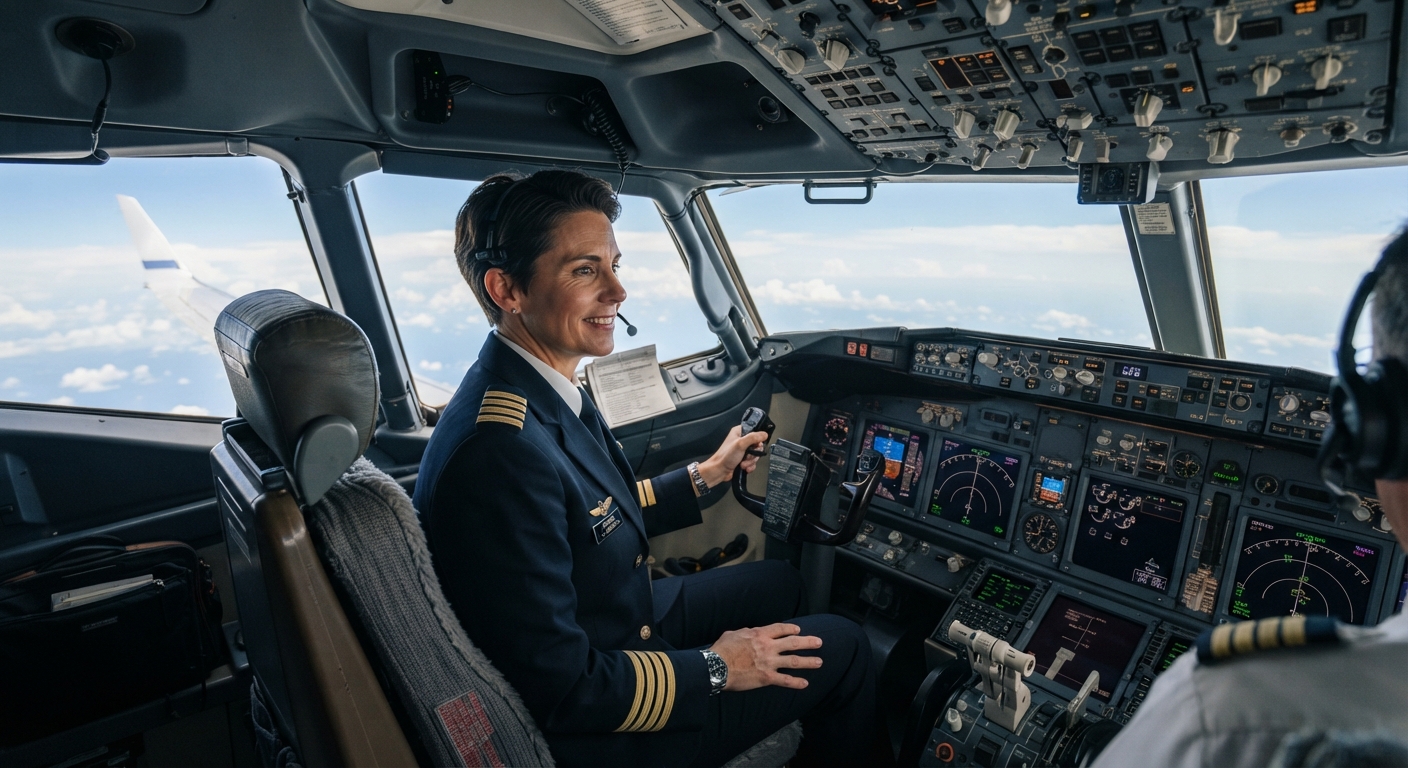
Being a pilot involves much more than sitting in the cockpit and flying the aircraft. Pilots prepare for each flight, check weather and flight information, communicate with air traffic control, monitor the aircraft’s systems and work with the rest of the crew to ensure the flight is operated safely.
What skills will you develop?
Aviation can help you develop valuable skills including:
Decision-making, Communication, Teamwork, Problem-solving, Concentration, Leadership, Time management and Technical knowledge. These skills can also be valuable in many other careers.