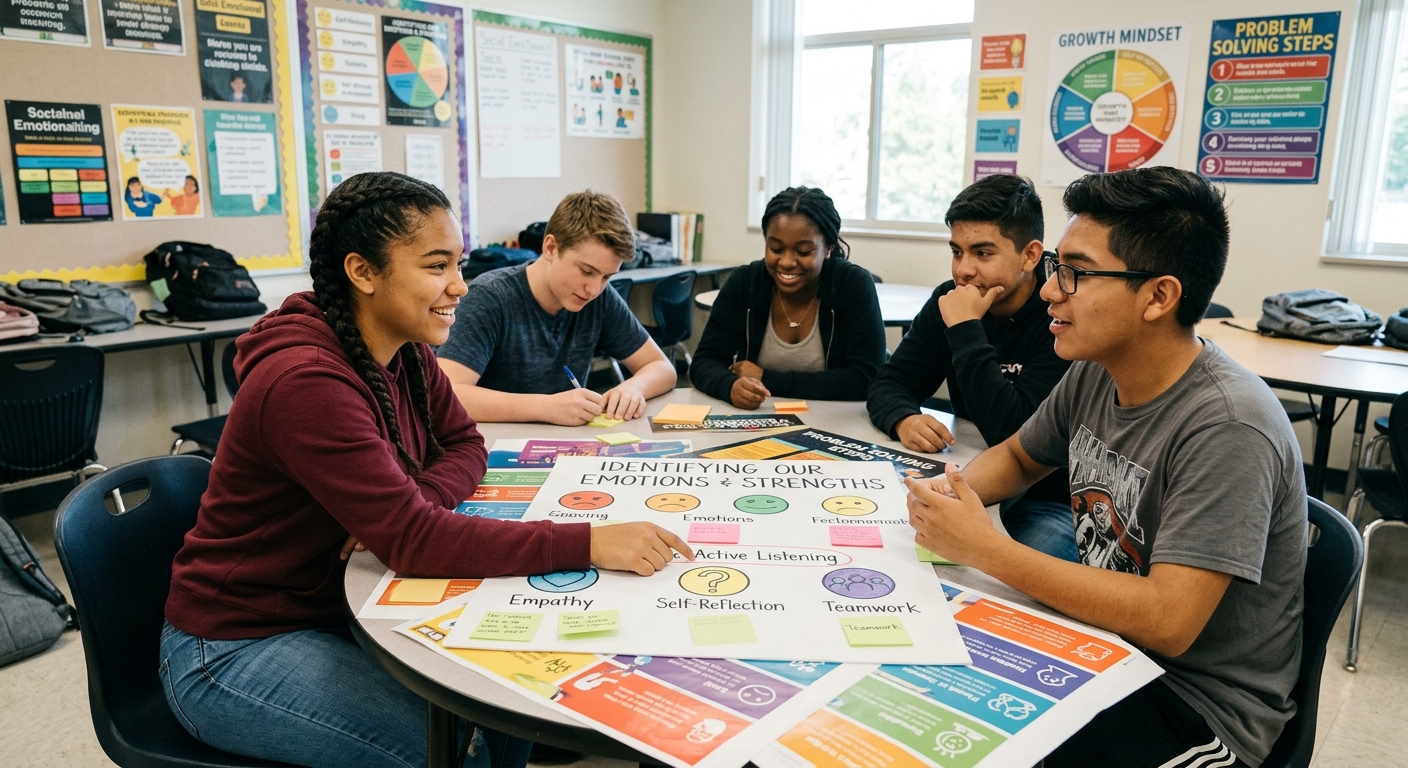
Social and Emotional Learning (SEL) is the educational process through which individuals learn to understand and manage emotions, set goals, show empathy, build positive relationships, and make responsible decisions. It equips students with foundational life skills that boost both academic performance and personal well-being.
Social-emotional learning (SEL) is often treated as a “soft” add-on, but that framing misses the point. In a workforce shaped by automation, AI, and constant change, skills like adaptability, collaboration, and emotional intelligence are becoming just as critical as technical knowledge.
At its core, Social-Emotional Learning focuses on five areas:
- 💛 Self-Awareness – Recognising emotions, strengths, and values.
- 🎯 Self-Management – Regulating emotions, managing stress, and achieving goals.
- 🤝 Social Awareness – Showing empathy and appreciating diversity.
- 🌍 Relationship Skills – Communicating, cooperating, and resolving conflicts.
- 💡 Responsible Decision-Making – Making ethical, safe, and constructive choices.
For example, self-management helps students handle stress and meet deadlines, which matters in fast-paced or remote work environments. Social awareness and relationship skills map onto teamwork, leadership, and cross-cultural communication—especially important in globalised industries. Responsible decision-making supports ethical thinking, something increasingly important in fields like AI and data science.
Organisations like CASEL have shown that students who receive strong SEL instruction tend to perform better academically and develop stronger long-term career outcomes. Employers consistently rank communication, problem-solving, and adaptability among the most in-demand skills—areas directly strengthened by SEL.
To prepare students for a changing workforce, schools can integrate SEL in practical ways:
- Embedding it into everyday lessons (e.g., group problem-solving in math or science)
- Using project-based learning to simulate real-world collaboration
- Teaching reflection and goal-setting alongside academic content
- Incorporating digital citizenship and online communication skills
The key is integration, not isolation. SEL works best when it’s woven into how students learn, not treated as a separate subject.